

How Contractors Can Adapt to Consumer Financial Trends
Homeowner financial behavior is shifting—driven by rising debt levels, constrained savings, and changing expectations around how everyday purchases are made. For contractors, this isn’t a background trend; it’s directly shaping how projects are evaluated, compared, and ultimately approved.
Looking for more insight into the financial trends behind this shift? Read Part I here.
The way homeowners make decisions has changed, and the sales approach needs to evolve with it. But for contractors, what exactly does that look like in practice?

Should contractors lead with monthly payments when presenting project costs?
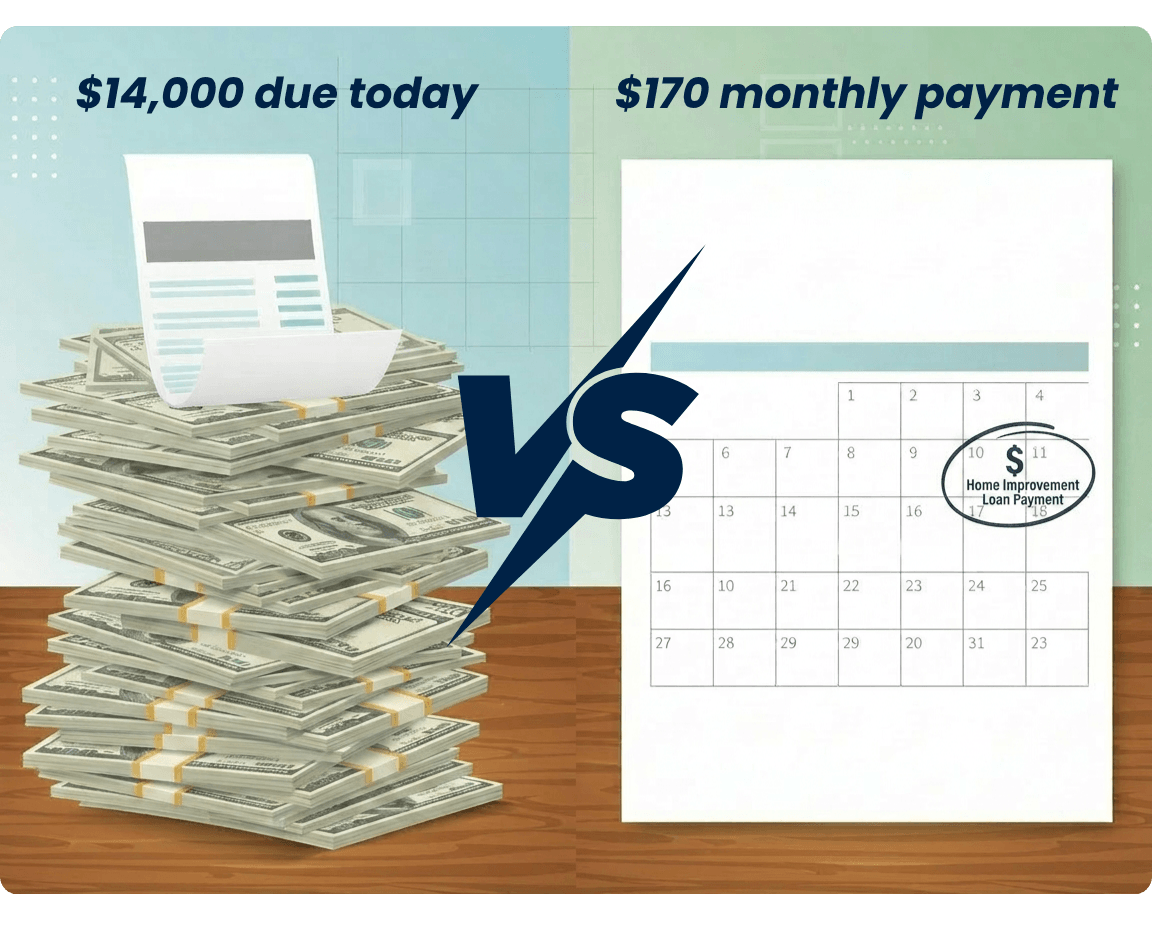
Yes—contractors should lead with monthly payment options, because most homeowners evaluate attainability based on monthly cash flow, not lump-sum pricing. But transparency matters: always present the monthly figure while also acknowledging total cost in the conversation, so homeowners have the full picture.
When you present a full project cost upfront without context, you’re asking a potentially financially stretched homeowner to solve a complex math problem on the spot. That friction can stall the conversation before it really begins.
Most homeowners don’t say no because the price is too high—they say no because they can’t see how it fits. That’s an important distinction, and one that can fundamentally change how you approach the conversation.
How contractors should present monthly payments to homeowners
- Instead of: “This project is $14,000.”
- Say: “This project comes out to about $170/month with a payment plan—which can be a manageable way to spread the $14,000 cost over time.”
Homeowners who think in monthly terms (which is the majority) are far more likely to move forward when the investment fits comfortably into their budget.
When should contractors offer financing to homeowners?
Contractors should offer financing to homeowners at the beginning of the sales process, not after price objections. Presenting financing upfront increases close rates by making projects feel immediately affordable and easier to move forward with.
Some contractors treat financing as a last resort—something introduced only after a homeowner pushes back on price. That approach limits opportunity.
Contractors who offer financing to homeowners upfront as a standard part of their estimate presentation see close rates jump from 38% to 49%. That’s 11 additional closed jobs for every 100 estimates.
This works because the homeowner no longer has to figure out how to pay for the project on their own. You’ve already provided a clear, actionable path forward.
How can contractors introduce financing early in the sales process?
- Mention financing during the initial consultation, not after the estimate
- Include monthly payment options directly in your written proposal
- “Many homeowners like to look at this as a monthly payment, so I’d be happy to show you what that could look like. I’ll also outline everything clearly in the proposal, so you have the full picture.”
- Train every member of your sales team to present payment options as a default—not a fallback
- “Don’t wait until the homeowner hesitates to bring up payment options. Lead with it every time so it just becomes a natural part of how you present every single project.”

Financing isn’t a discount. It’s a decision-making tool. Offering it proactively positions you as a contractor who understands your customer’s real world.
How should contractors adjust their sales approach for different homeowners?
Generational differences in financial behavior are real, and a sales pitch that resonates with a 65-year-old homeowner may fall flat with a 30-year-old first-time buyer. Learning to read the room and adjust quickly is one of the most underrated skills in contractor sales.
How should contractors offer financing to younger homeowners? (Millennials and Gen Z)
Younger homeowners tend to respond best to empathetic, value-driven conversations paired with flexible payment options.
Lead with empathy around where many young adults are starting financially.
Many younger homeowners are still early in their financial journey. Acknowledge that reality and make it easy for them to understand how the project fits into their monthly budget.
“I know a lot of homeowners at this stage are balancing things like student loans, high mortgage payments, and just getting established financially. So, I always try to make sure you can see what this looks like monthly.”
Frame the conversation around long-term value, not just upfront cost.
Younger homeowners often approach decisions with a more immediate mindset. Reframe the conversation to highlight how the project improves daily life and delivers value over time.
“This is one of those projects where the value really shows up over time—how much you get to enjoy it, how often you use it, and how it improves your day-to-day life in the home.”
Offer multiple options as a standard part of the process.
This group is accustomed to having choices and flexibility in how they manage payments. Presenting multiple monthly payment options supports confident decision-making.
“When I put this together, I’ll include a few monthly payment options so you can compare a couple of different scenarios and see what feels like the best fit for you.”
How should contractors offer financing to older homeowners? (Gen X and Boomers)
Older homeowners respond best to financing conversations that emphasize liquidity preservation, predictability, and long-term value.
Respect that many older homeowners value keeping their hard-earned savings and liquidity intact.
Many older homeowners can fund larger projects but may still prefer to keep their savings and investments accessible rather than tying them up toward one single expense.
"A lot of homeowners we work with choose to keep their savings intact and use a monthly payment option instead, just to maintain flexibility with their cash flow. I'm happy to show you what that would look like."
Emphasize predictability and stability.
Clear, structured payment options help support confident decision-making by making it easier to understand how the project fits into their overall financial picture.
"What most people like about this approach is that it's predictable—you know exactly what your monthly payment looks like, with a fixed interest rate and no surprises. And you always have the flexibility to pay it off early if you want, with no penalty."
Focus on long-term value, durability, and an investment mindset.
Older homeowners often evaluate projects through the lens of longevity, quality, and return on investment. Reinforce how the project increases their home's value.
"This is really a long-term improvement to your home—something that adds value and function, while also contributing to the value of one of your most important assets."
Reducing friction in the decision-making process
Homeowner hesitation isn’t always about price. As covered in Part I, it’s often a form of risk management—a response to uncertainty about income, job security, and financial stability. Your job isn’t to push harder; it’s to support a clear and confident decision-making process.
Practical ways to reduce decision friction
- Highlight the cost of inaction
Show homeowners the financial impact of delaying projects—rising energy bills, deferred repairs, or declining home value. - Offer fast, clear follow-up
Respond promptly to questions and bids. A homeowner who got three bids and heard back from only one contractor often goes with the one who responded. - Make financing easy
If your financing process is complicated or slow, you’ll lose deals you should have won. Partner with a lender that allows you to offer financing to homeowners with simple, transparent monthly payment options and a frictionless application experience.
How can contractors protect margins without losing the job?
Contractors can protect margins by clearly communicating value early, discussing the cost of delaying the project, and offering financing to help homeowners move forward without changing the project’s scope or reducing the price.
Financial pressure on homeowners often translates into pressure on your pricing. But protecting your margins doesn’t have to mean losing the job.
Strategies for holding your price
- Anchor value, not cost: Before revealing price, walk the homeowner through exactly what they’re getting and why it matters. Price lands differently after a strong value conversation.
- Document the cost of waiting: Document the cost of waiting: Frame delay as a tradeoff—what they gain by moving forward now versus what remains unchanged if the project is postponed.
- Use financing to bridge the gap: A project priced at $12,000 may work better for a homeowner at $160/month. Financing allows homeowners to choose a payment path that fits their situation while keeping the project scope and price unchanged.
How can contractors build a business that withstands financial uncertainty?
Contractors can build a more resilient business by strengthening their financing partnerships, training their teams to confidently discuss payment options, and consistently offering financing as part of every estimate.
Long-term stability comes from building systems that support consistent performance even when market conditions shift.

Invest in your contractor financing partnership.
A strong lender relationship is a business development tool, not just a payment option. The right partner helps you close more jobs, reach a wider range of homeowners, and maintain consistency when demand shifts.
Train your team on financial conversations.
The ability to have clear, empathetic conversations about payment options is a core sales skill. When handled well, it can increase close rates, reduce hesitation, and create a more confident homeowner experience.
Make financing part of every estimate.
Financing should be presented consistently, not treated as a backup option. When it is built into the standard sales process, it helps support more predictable close rates across changing market conditions.
Frequently Asked Questions
How can contractors increase close rates when homeowners are financially hesitant?
Lead with monthly payment options rather than total project cost, offer financing to homeowners proactively during the estimate, and focus on reducing decision friction. Homeowners are more likely to commit when the path forward feels financially manageable and clearly defined.
Should contractors offer financing to homeowners on every job?
Yes. Offering financing to homeowners removes a key barrier and allows more projects to move forward without price becoming the limiting factor. Contractors who consistently present financing as part of every estimate can increase close rates and have more efficient sales conversations.
How does consumer confidence affect contractor sales?
When consumer confidence is low, homeowners tend to slow decision-making and become more cautious about spending—even on projects they want or need. This often leads to longer timelines, more comparison shopping, and a greater likelihood of delaying decisions.
Contractors can respond by explaining options simply, avoiding pressure, and consistently including financing on every estimate, so homeowners can take advantage of it if they choose to.
What are the best financing options for homeowners?
Contractors should offer financing options that are easy to apply for, transparent, and provide competitive rates with flexible repayment terms. This can look like partnering with a dedicated home improvement financing provider rather than relying on homeowners to use credit cards or personal loans.
How can contractors protect margins in a financially uncertain market?
Focus on clearly communicating the value of the project before discussing price, so homeowners understand the scope and benefits. Use financing to help make full-scope projects more accessible without lowering pricing and include it consistently in estimates. Highlighting the impact of delaying work can also help homeowners make more informed decisions.
Watercress Financial helps home improvement contractors offer fast, flexible financing that supports stronger close rates and consistent growth. If you're interested in learning more about what sets us apart, let's connect.
– Madison Schoppe (Marketing Content Developer)